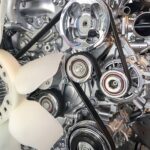
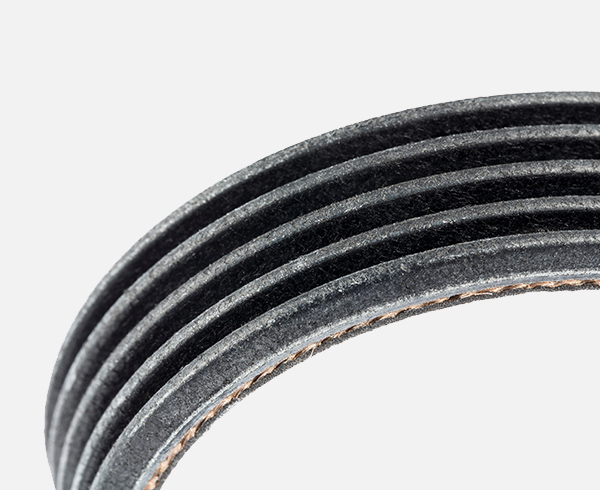
Serpentine belts are what convey power from an engine’s crankshaft pulley to the series of drives comprising the front engine accessory drive, or FEAD. The belt maintains the correct amount of tension throughout the drive system by running past tensioners and idlers.
A serpentine belt, manufactured with premium synthetic EPDM rubber by a highly reputable brand, is a low-noise, low-maintenance, compact, affordable, and low-emissions solution.
Today, many serpentine belts have been updated and improved with materials that maximize lifespans and performance. Some serpentine drive belts feature:
- Triple-Layer Belt Construction – branded rubber, standard as the base material makes up the belt’s flat area. Slip-reducing grooves that contact guide pulleys and tensioner pulleys consist of adhesion rubber. Layered polyester cords throughout provide flex and resist cracking that’s typically induced by hot and cold cycles.
- Car-Specific Construction – A car’s make, model, and year are sufficient reference data to find the correct belt for the car’s specs.
- A Tensioner – This feature prevents squealing and early wear and extends part life by pulling the belt into place on guides and pulleys.
Some brands collaborate with major automotive manufacturing companies, and their serpentine drive belts usually meet OEM specs and remain serviceable up to 80,000 or 100,000 miles. OEM specs also ensure less power-train stress, increasing fuel efficiency and reducing emissions. Brands strive to improve car safety by helping prevent belt failures and lost power steering.
Some serpentine belts may cost a bit more than non-OEM parts, but the fact that they’re designed to work for five or ten years makes them a smart and worthwhile investment.
Now retrieving an image set.
Bando USA 6PK2345 OEM Quality Serpentine Belt | Replaces 6K923 12554029 12569347 12637202 24507264 49 61 058 5301 0150 12 57 6450 93 18 5050 4G7Z 8620-BA 6W7Z 8620-BA 013.
$21.40 (as of September 13, 2026 06:20 GMT -04:00 - More infoProduct prices and availability are accurate as of the date/time indicated and are subject to change. Any price and availability information displayed on [relevant Amazon Site(s), as applicable] at the time of purchase will apply to the purchase of this product.)
Now retrieving an image set.
Bando USA 4PK945 OEM Quality Serpentine Belt | Replaces 4K372 30016435 30019502 MB568898 MB568899 11920-AG900 11950-AR000 11950-AR00A 17521-66J00 25212-38001 49180-50G00.
$7.70 (as of September 13, 2026 06:20 GMT -04:00 - More infoProduct prices and availability are accurate as of the date/time indicated and are subject to change. Any price and availability information displayed on [relevant Amazon Site(s), as applicable] at the time of purchase will apply to the purchase of this product.)
Now retrieving an image set.